
Your website emergency card: the 5 things to know before your site breaks
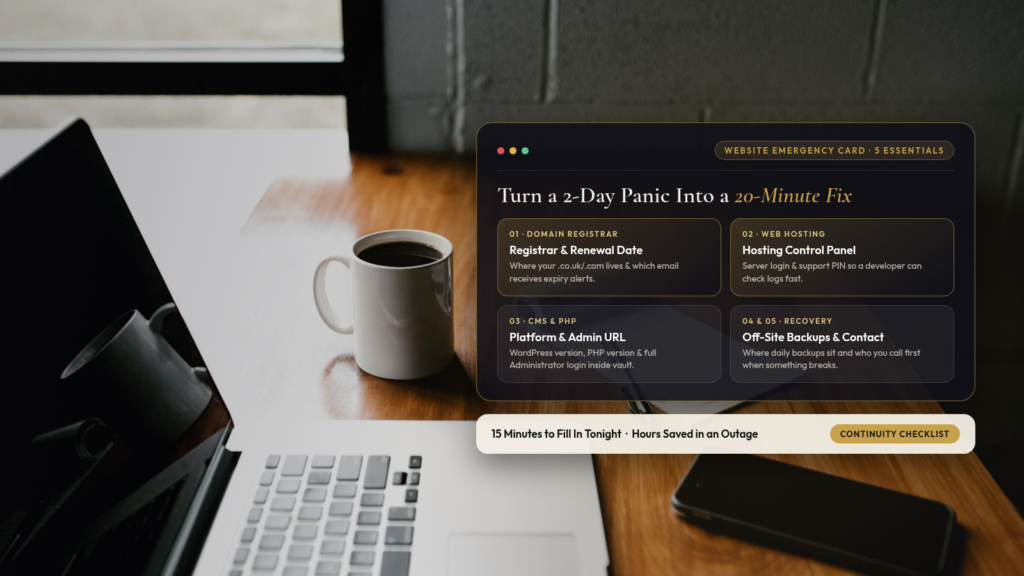
When a small business website goes offline, most of the downtime isn’t spent fixing the technical fault. It is spent hunting for domain, hosting, and backup logins. Put these 5 things on one page tonight.
Black Friday hosting deals: read the renewal price before you click buy
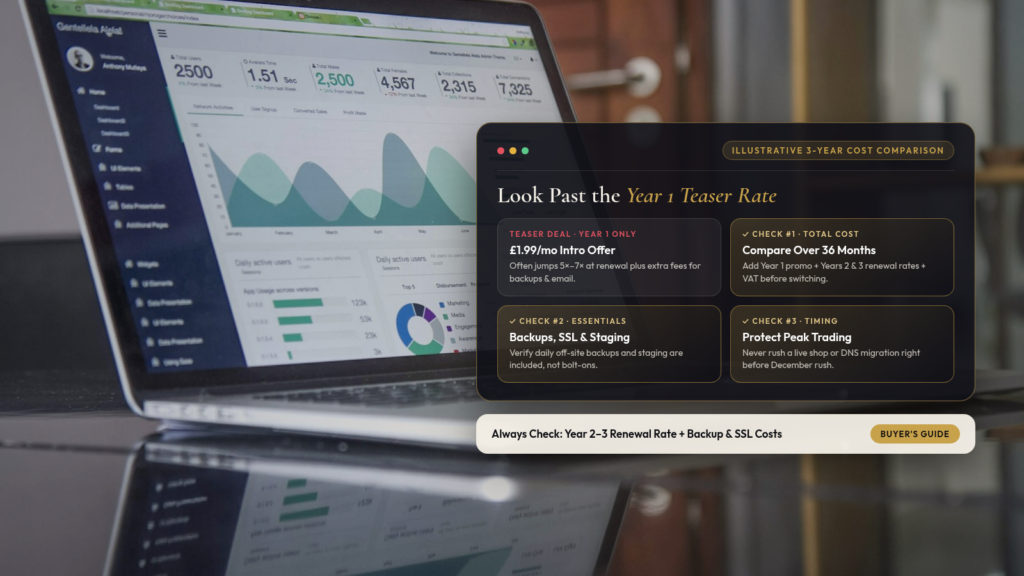
Every November, hosting companies advertise headline rates like £1.49 a month. Before you move your business website to save thirty quid, check the three numbers that actually matter over three years.
Yes, AI can build a website in 30 minutes. Here’s what it can’t do.
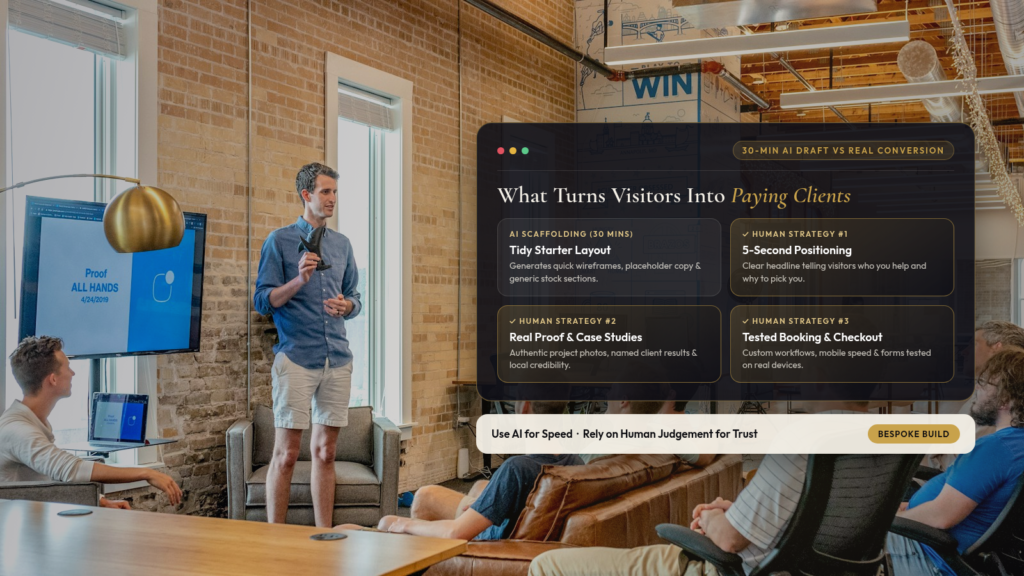
Every week another tool promises to build your business website from a single sentence in half an hour. Here is an honest look at what AI does brilliantly, and the five things it still cannot do for a real business.
Is ChatGPT recommending your business? A 20 minute check for small business owners
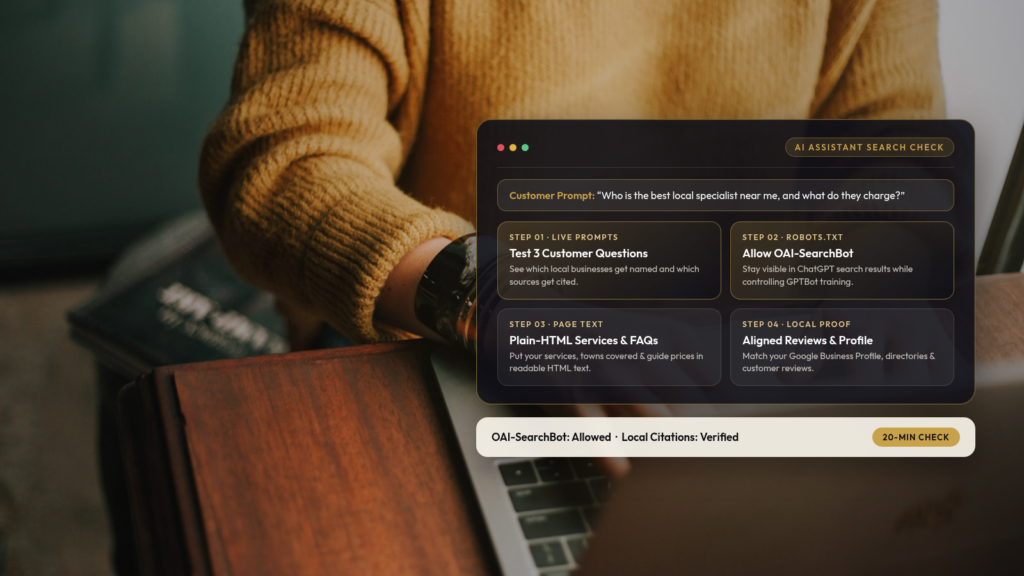
More customers are typing whole questions into ChatGPT instead of clicking through ten Google links. Here is a practical 20 minute check to see whether AI assistants can find, read, and recommend your business.
Hiring someone to fix your website? 8 questions to ask before you say yes
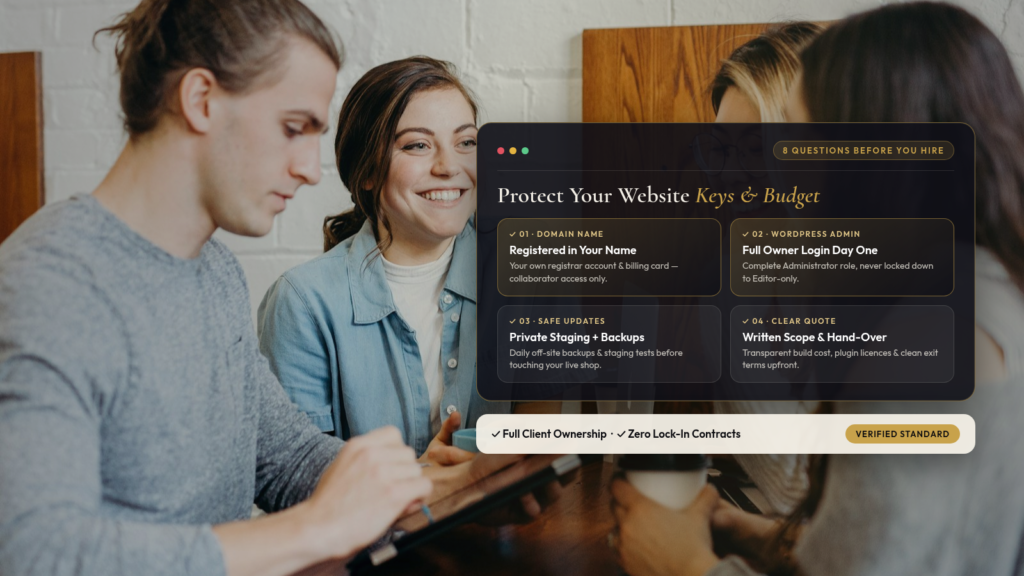
Before you hand over a deposit or the keys to your business website, here are 8 plain English questions to ask any web designer or developer, what a good answer sounds like, and the red flags to walk away from.
Vora Groups: Manage Every Property From One WordPress Gift Voucher Plugin
Vora can now manage groups of properties from one install, with a smoother customer journey from the storefront to a QR code and Check and Reserve link that arrive the moment a voucher is sent.
AI Tools for Small Business Websites in 2026: What a Birmingham Web Designer Actually Uses
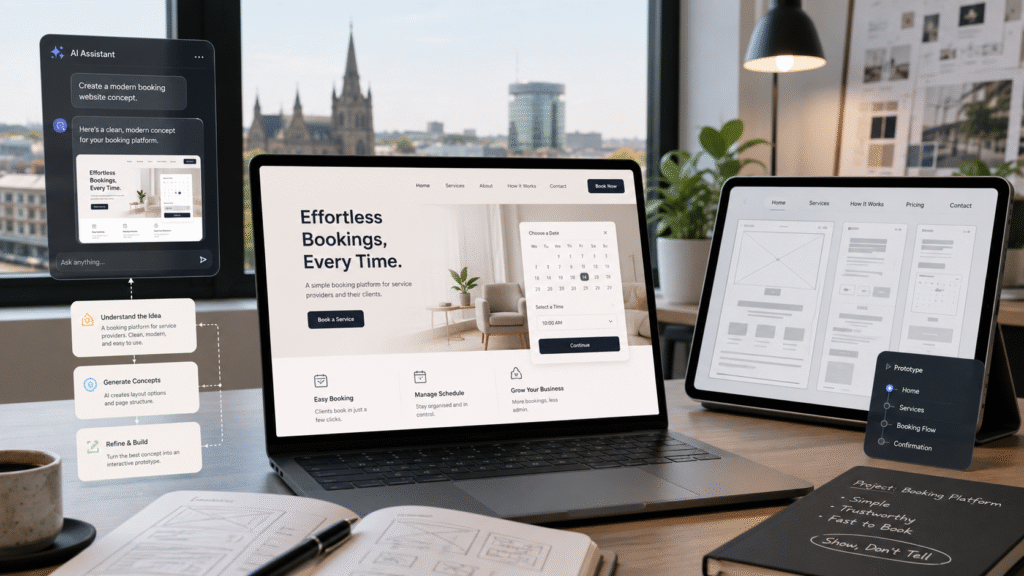
AI tools are everywhere. Every week there’s another platform promising to build your website, create your content or automate your business for you. Working out which AI tools web design actually needs isn’t always obvious. But there’s a big difference between trying an AI tool and actually making it part of the way you work. At Shaan Designs, I’ve been using AI across web design, development, content and digital products for the past year or so. Some tools have genuinely changed the way I work. Others didn’t outlast the free trial. Rather than another list of “the best AI tools in 2026,” this is a look at how I actually use AI in real projects, where it saves time, and where I still think human judgement matters more. Showing Leads Their Website Before They Commit One of the most useful ways I’ve found to use AI has nothing to do with replacing design or development. It’s about making an idea easier for a potential client to understand. A prospective client recently got in touch about a driving school franchise booking platform. Instead of sending over a long written proposal and asking them to imagine what the platform might eventually look like, I used AI to help put together working HTML mockups quickly, so they could see a possible direction, understand how parts of it could behave, and give feedback before either side committed to a full build. That initial concept work eventually developed into a formal engagement with a full project roadmap. For small businesses deciding who to work with, I think this matters more than many of the headline AI features people talk about. Seeing an idea taking shape is far more useful than reading several paragraphs describing what it might become. I use a similar approach on TikTok, creating website concepts and experiments that show potential clients what’s possible before we’ve even had a conversation. AI hasn’t removed the need to understand what a client needs. It’s simply made it much faster to turn that understanding into something they can actually see. Claude and Codex: From an Idea to Working Functionality Claude is one of the tools I use most heavily in development, particularly when I’m working on custom WordPress functionality. Most of the plugin development I do for Shaan Designs now involves Claude somewhere in the workflow, from working through feature logic and edge cases to generating, reviewing and refining the code itself. Before building something, I’ll often use it to work through questions like what should happen when a user takes a particular action, what happens if something fails halfway through, which permissions different users should have, how information should move between the front end and admin area, and what needs testing before a feature is actually finished. I also use Codex alongside it, particularly during build-heavy stretches where the requirements are already clearly defined and there’s a larger amount of development work to get through. Which tool I reach for depends on the problem, but neither replaces the process itself: build, test, find problems, fix them, test again. AI can produce a large amount of code very quickly. Whether that code is reliable enough for a real business to depend on still comes down to testing, judgement, and taking responsibility for what eventually goes live. ChatGPT: Direction Before Generation Away from development, ChatGPT is usually where I work out direction before I start generating anything. For web design, I use it alongside Relume to work through page structure and content direction before moving into the visual design stage. ChatGPT helps me think through what a page actually needs to communicate, which sections matter, and what journey someone should follow through the site. Relume then turns that thinking into an initial sitemap or wireframe I can pull into Figma and refine properly. I use the same approach for animation, video and social content. Tools that charge credits per generation punish trial and error, so I’ll usually work out the script, pacing or purpose of a piece first, then generate once I have a clearer idea of what I’m actually trying to produce. For me, that’s one of the most practical uses of AI: not always creating the finished thing, but cutting down the wasted work it takes to get there. Higgsfield and Google Flow: Creating Video Without a Production Crew Video has traditionally been one of the more expensive types of content for a small business to produce properly. You need cameras, lighting, locations, editing, and often actors or presenters. I use both Higgsfield and Google Flow depending on what I’m trying to produce. Sometimes the priority is strong camera control, other times I need several shots to feel like one continuous sequence rather than a set of disconnected AI clips. That makes both tools useful for website content, promotional concepts and social media, where a full production shoot wouldn’t make financial sense. The technology itself is moving quickly. Video, voice, lip-syncing and audio generation are increasingly overlapping, so the process isn’t as separated as it was even a couple of years ago. But the same rule applies regardless of which model produced it: if the finished video looks poor, feels generic or doesn’t communicate anything useful, the fact that AI made it isn’t particularly interesting. The output still has to serve a purpose. ElevenLabs: Giving Content a Voice Voice generation is another area where AI has removed a real production barrier. A small business no longer necessarily needs a recording studio, a microphone setup and hours of editing every time it wants professional narration. I use ElevenLabs for things like website videos, product walkthroughs, social content and tutorials. For a business without an internal marketing team or a regular voice-over budget, that opens up content that would previously have been too expensive or time-consuming to produce. But realistic narration doesn’t automatically make good content. The script still has to be worth listening to. Why AI Tools Web Design Still Needs the Traditional Toolkit Despite
We’ve Rebranded: A New Look for Shaan Designs (and What It Means for Your Business)
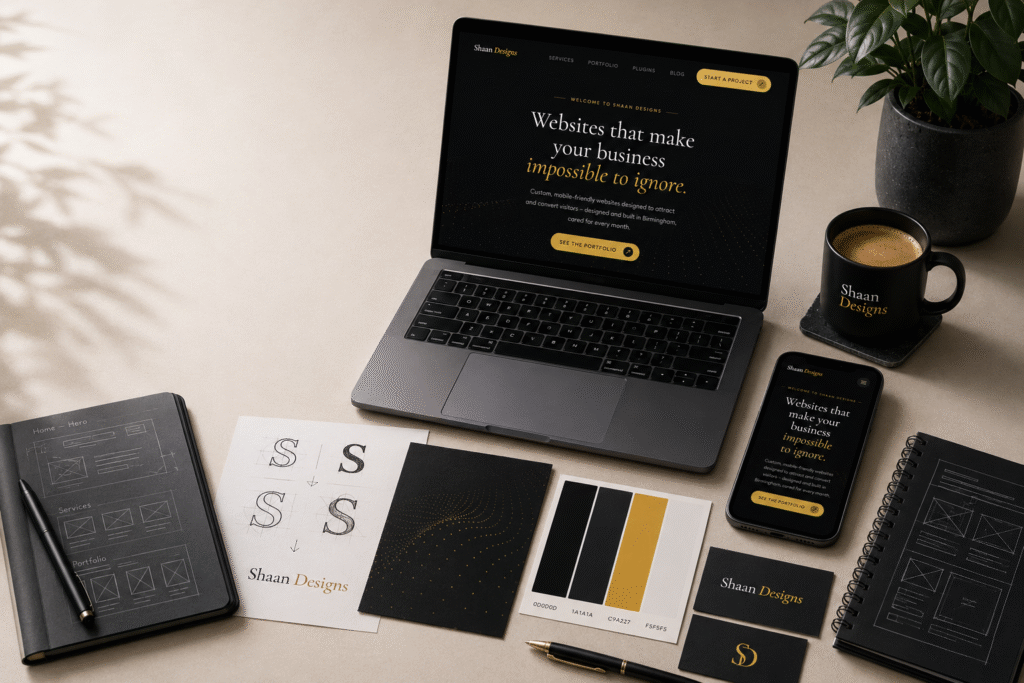
If you’ve visited shaandesigns.com recently, you’ll have noticed something different. This website rebrand Birmingham brings a new logo, a new identity, and a new structure — but it isn’t just a fresh coat of paint — it’s a reflection of how the business has grown, and what it can now do for you. Here’s what’s changed, why it matters, and how it benefits your business whether you’re a small local company or a growing one with bigger ambitions. Why this website rebrand Birmingham, and why now. Shaan Designs started as a Birmingham-based freelance web design service: build a website, make it look good, help it rank. That’s still true. But over the past year, the work has expanded well beyond that. I’ve built and shipped real WordPress products — gift voucher platforms, custom navigation systems for large catalogues, booking and enquiry tools — tested on live client businesses, not just theory. I’ve taken on SEO audits, ongoing site care, and custom plugin development for businesses that needed something WordPress doesn’t offer out of the box. The old site didn’t reflect any of that. The new one does. This website rebrand Birmingham signals a broader shift in what the business can deliver. The rebrand is about making sure that when you land on shaandesigns.com, what you see matches what I can actually build for you. What’s changed on the site. A few things are new: A new visual identity — new logo, new colours, a cleaner, more confident look across every page. A restructured site — clearer navigation between Services, Portfolio, Plugins and the Blog (you’re reading the first post on it now). A dedicated Plugins page — showcasing the licensed, supported WordPress products built on real client work, alongside custom plugin development for businesses that need something bespoke. A simpler way to get started — one page where you can call, message on WhatsApp, or send a written brief, with a clear three-step process from first conversation to launch. The services behind this website rebrand Birmingham clients keep asking about. Everything Shaan Designs offers falls into a few core areas: Web design and build. A custom website designed around your brand and your customers, built to be fast, mobile-friendly, and genuinely easy to use. Not a template with your logo dropped on top. Monthly care. Updates, security patches, content changes and off-site backups, handled every month so your site never quietly falls behind or breaks without you knowing. Technical SEO. Making sure your site is actually findable — proper structure, schema, sitemaps, and the technical groundwork that gets you into search results in the first place. Plugins and custom development. This is the newer part. Licensed WordPress products like Vora Gift Voucher (a full gift voucher platform with Stripe and PayPal), Shop Navigator (mega-menu navigation for large WooCommerce catalogues), and Events Manager Enquiry (a complete enquiry-to-payment system for events and entertainment businesses). If your business needs functionality that doesn’t exist yet, it gets designed and built as a proper plugin, not a workaround. How this benefits your business. The honest answer is: it depends on where you are. If you’re a small business that needs a first proper website, or your current one feels dated and isn’t bringing in enquiries, the core service is straightforward. A custom-built site, designed to convert visitors into customers, with ongoing care so it stays fast and secure without you having to think about it. If you’re a larger or growing business, the conversation is different. You might already have a website, but it can’t handle your catalogue, your booking flow, or the way your customers actually want to buy from you. That’s where the plugin work comes in — mega-menu navigation for hundreds of products, voucher and loyalty systems with balance tracking, booking platforms that turn enquiries into paid WooCommerce orders. These aren’t theoretical features. They’ve been built, tested and proven on real businesses first. Either way, the goal is the same: a website (and the systems behind it) that actually does work for your business. Whether you need a full website rebrand Birmingham style or something more targeted, the result should be a site that earns its place. What makes Shaan Designs different. A few things, honestly: One person, end to end. No account managers, no handoffs between departments. The person who talks to you about your business is the same person who designs it, builds it, and looks after it afterwards. Products, not just projects. Most web design agencies stop at the website. Shaan Designs also builds the machinery behind it — the plugins, integrations and systems that make a site actually work for a business at scale. Built and proven in Birmingham. Every plugin on the Plugins page started as a real client problem, solved first, then made available more widely. Nothing ships untested. A process you can actually follow. Discovery call, a clear written proposal with cost and timeline, then design, build and launch — with you seeing everything before it goes live. Where this goes next. This rebrand isn’t the finish line, it’s the new starting point. The plan is to keep building: more plugins, more case studies, and more posts here covering what’s been learned from real client projects — what works, what doesn’t, and how small decisions on a website end up affecting enquiries, sales and growth. If something here sounds like it applies to your business, the best next step is a quick conversation. Have a look at the portfolio to see the kind of work this covers, browse the plugins if you’re curious about the products, or just start a project and tell me what you’re working with.